In the wave of sustainable fashion, more and more brands are asking the same question: How exactly is the fabric I order produced?
At Valutextile, we never shy away from this question. Today, follow our lens to the complete journey of knitted fabrics from fiber to roll.
Source: Beginning in a Sustainable Forest
It all starts with FSC-certified sustainably managed forest land. The wood pulp for our Lyocell category comes from eucalyptus and beech plantations grown without irrigation or pesticides. Every batch of wood pulp carries a traceable provenance before entering the factory.
This is the first dividing line between us and traditional viscose fabrics.
Spinning: A Closed-Loop Process with 99.5% Solvent Recovery
Wood pulp enters the dissolving and spinning stages. Unlike traditional viscose processes, Valutextile's Lyocell spinning technology achieves a near-complete closed-loop production: solvents used in the production process are continuously recycled and reused, with a recovery rate of up to 99.5%, avoiding the release of harmful chemicals into water bodies and the atmosphere.
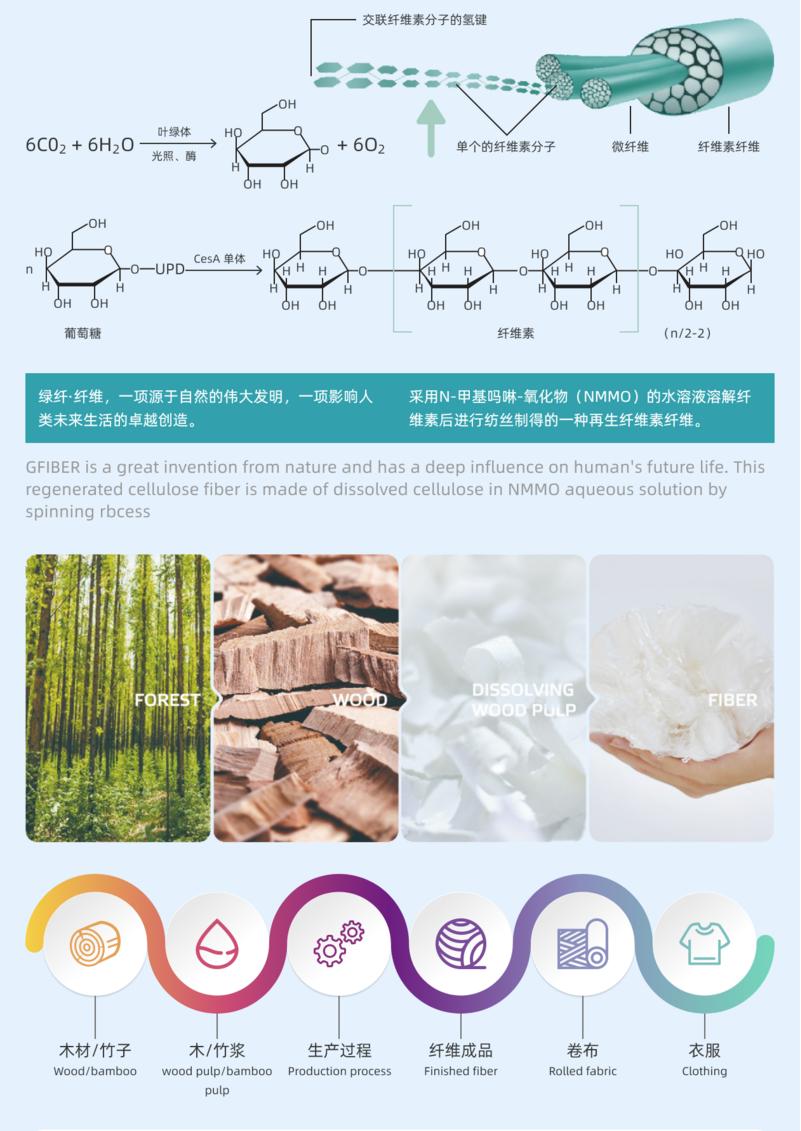
In the spinning workshop, white, fluffy fiber raw materials are fed into precision equipment, undergoing a series of processes including dissolving, filtering, spinning, and drawing, ultimately becoming clean, fluffy short fiber bundles. Quality inspectors take samples every two hours to conduct consistency tests on fineness, strength, and color in the laboratory-this is the guarantee of our consistently high-quality deliveries.
Spinning and Weaving: The Precision Collaboration of Over 200 Circular Knitting Machines
After the fibers are packaged, they enter the spinning mill to be processed into yarns of various specifications, and then transported to Valutextile's own weaving base. Over 200 high-speed circular knitting machines operate day and night, weaving yarn into the fabric structures required by customers: plain weave, double rib, terry sweatshirt fabric, pique mesh, and more.
Next to each machine hangs a process execution sheet for that batch, indicating the yarn count, needle type, speed setting, and target weight. Our operators conduct a fabric inspection every 30 minutes to ensure the fabric is free of horizontal stripes, holes, and oil stains-a system guaranteeing consistent quality even with 200 machines operating in tandem.
Dyeing and Finishing: A Visible Commitment to Safety Before the greige fabric enters the dyeing workshop, the laboratory completes small-sample color testing and formula confirmation. Throughout the dyeing and finishing process, we adhere to the OEKO-TEX Standard 100 chemical control list, prohibiting the use of formaldehyde, heavy metals, and sensitizing dyes.
After setting and pre-shrinking, an A4-sized sample is cut from the end of each roll of fabric and sent to the internal laboratory for full inspection: weight deviation, width tolerance, color fastness (washing/rubbing/sun exposure), shrinkage rate, pilling grade, and bursting strength. Only fabrics that pass all the tests can be labeled with the Valutextile name.